
Exploring the Endocannabinoid System: The Body's Cannabis Receptors

Introduction:
The human body is a complex network of systems and processes that work together to maintain balance and regulate various functions. One fascinating system that has gained significant attention in recent years is the endocannabinoid system (ECS). In this article, we will delve into the intricacies of the ECS, exploring its components, functions, and the role of cannabis receptors in this vital system. Join us as we uncover the fascinating world of the endocannabinoid system and its potential implications for overall health and well-being.
What is the Endocannabinoid System?
Introduction to the Endocannabinoid System
We will provide an overview of the endocannabinoid system, discussing its discovery, components, and its widespread presence throughout the human body.
Key Components of the ECS
An exploration of the key components of the endocannabinoid system will be conducted, including endocannabinoids, receptors, and enzymes. We will discuss the primary endocannabinoids, such as anandamide and 2-arachidonoylglycerol (2-AG), and their role in maintaining homeostasis.
Cannabis Receptors and Their Significance
CB1 Receptors
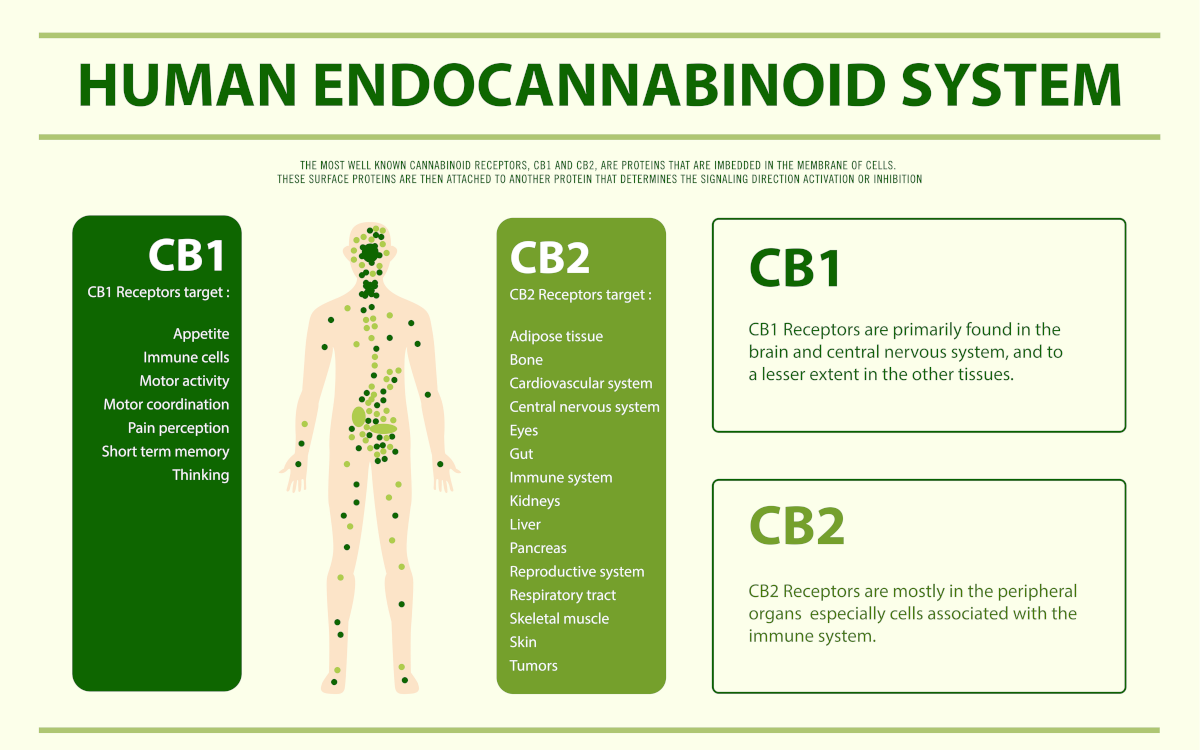
We will focus on CB1 receptors, which are primarily found in the central nervous system (CNS). Their distribution and functions within the brain and spinal cord will be discussed, along with their interaction with cannabinoids, including THC.
CB2 Receptors
A detailed exploration of CB2 receptors, predominantly located in peripheral tissues, immune cells, and organs, will be conducted. We will examine their role in modulating immune response and inflammation.
The Endocannabinoid System's Functions
Homeostasis and Regulation
The endocannabinoid system plays a crucial role in maintaining balance and regulating various physiological processes, including appetite, mood, pain sensation, immune response, and sleep. We will explore how endocannabinoids and their receptors contribute to these essential functions.
Neurotransmission and Neuromodulation
We will discuss how the ECS influences neurotransmission and neuromodulation, affecting cognitive processes, memory, and mood regulation. The interaction between endocannabinoids and other neurotransmitter systems will also be explored.
Role of the ECS in Health and Disease
Stress and Anxiety Regulation
The ECS has been implicated in the regulation of stress and anxiety. We will examine how the endocannabinoid system interacts with the hypothalamic-pituitary-adrenal (HPA) axis, which plays a crucial role in stress response.
Pain Perception and Management
An exploration of the ECS's involvement in pain perception and management will be conducted. We will discuss the analgesic properties of cannabinoids and their potential applications in pain management.
Immune Function and Inflammation
The ECS plays a vital role in modulating immune function and inflammation. We will examine how endocannabinoids and cannabinoid receptors regulate immune responses and their potential implications for autoimmune diseases and inflammatory conditions.
Clinical Implications and Therapeutic Potential
Cannabinoid-Based Medicines
We will discuss the development of cannabinoid-based medicines, such as synthetic cannabinoids and pharmaceutical formulations containing cannabinoids, and their potential therapeutic applications.
Cannabinoid Research and Future Directions
Ongoing research efforts to further understand the endocannabinoid system and its potential therapeutic applications will be explored. We will highlight current studies and areas of focus in the field.
Conclusion:
The endocannabinoid system, with its intricate network of receptors and endocannabinoids, plays a vital role in maintaining homeostasis and regulating various physiological functions. The interaction between cannabinoids, such as those found in cannabis, and the ECS has opened up new avenues of research and potential therapeutic applications. As our understanding of the endocannabinoid system continues to evolve, there is immense potential for the development of targeted treatments for various health conditions. The exploration of the ECS and its cannabis receptors holds promise for advancements in medicine and improved well-being for individuals worldwide.